
Key Takeaways
- Government construction contracts are among the most reliable, well-funded work a contractor can win — the federal government buys construction every single day.
- You don’t need to be huge to start; small-business set-asides exist specifically to route work to smaller firms.
- The first real steps are registering in SAM.gov, getting the right certifications, and learning to read a solicitation.
- Winning your first bid is more about following the process precisely than about being the lowest price.
- Federal Construction University helps contractors skip the guesswork with a book and a free strategy consult.
If your construction business runs on the ups and downs of private jobs, government construction contracts are the most overlooked way to add steady, well-funded work. The federal government is the largest buyer of construction on earth, it pays reliably, and it sets aside a huge share of that work specifically for small businesses. The catch is that the process has its own rules — and once you learn them, a whole new pipeline opens up. Here’s how government construction contracts work and how to land your first one.
What Are Government Construction Contracts?

Government construction contracts are agreements to build, renovate, or repair facilities for federal, state, or local agencies — everything from military housing to VA hospitals to roads. Federal agencies post these opportunities publicly and award them through a structured bidding process, often with a portion reserved for small and disadvantaged businesses. The work is real construction; the difference is who’s paying and how you win it.
Because the buyer is the government, the money is dependable and the volume is enormous. That reliability is exactly why so many contractors want in — a single federal contract can stabilize a business that used to live job-to-job.
Why Should Contractors Bid on Government Work?

Government work gives you a steady, well-funded backlog that private jobs rarely match. Agencies pay on defined terms, budgets are set in advance, and demand doesn’t disappear when the local housing market slows. For a small contractor, that predictability can be the difference between feast-or-famine and a business you can actually plan around.
There’s also less competition than people assume. Many contractors never bid federal work because the paperwork looks intimidating — which means the ones who *do* learn the process face a smaller field. The barrier that scares people off is the same barrier that protects your margins once you’re in.
What Certifications Help You Win Federal Contracts?
Small-business certifications route a share of federal work directly to qualifying firms, which can make you far more competitive. The main programs, administered through the SBA, are worth knowing:
| Certification | Who it’s for |
|---|---|
| 8(a) Business Development | Socially and economically disadvantaged small businesses |
| HUBZone | Businesses in historically underutilized business zones |
| SDVOSB | Service-disabled veteran-owned small businesses |
| WOSB | Women-owned small businesses |
Qualifying for one of these can make you eligible for set-aside contracts where you’re competing against a much smaller pool — sometimes only other certified firms.
How Do You Register to Bid on Government Contracts?
Getting eligible to bid is a defined, step-by-step process — not a mystery. Here’s the path most contractors follow:
1. Get a UEI and register in SAM.gov — this is the official system for doing business with the federal government.
2. Confirm your NAICS codes so agencies can find you for the right kind of construction work.
3. Pursue any certifications you qualify for (8(a), HUBZone, SDVOSB, WOSB).
4. Search active solicitations on SAM.gov that match your trade and location.
5. Read the solicitation carefully and submit a complete, compliant bid before the deadline.
Miss a required document or a deadline and your bid is out — so precision matters more than speed here.
How Do You Win Your First Government Contract?
Winning your first contract is less about being the cheapest and more about being the most *compliant and credible* bidder. Agencies want firms that follow the solicitation exactly, show they can perform, and price the work realistically. Underbid to win and you’ll lose money; ignore a required form and you’ll be disqualified before price even matters.
Start with smaller contracts to build a past-performance record, then use those wins to qualify for larger ones. Past performance is currency in federal work — each completed contract makes the next one easier to win.
What Gets Contractor Bids Rejected — and How Do You Avoid It?
Most losing bids aren’t beaten on price — they’re thrown out on technicalities before price is ever considered. The government evaluates bids for strict compliance first, so a single missing form, an expired registration, or a misread requirement can disqualify an otherwise strong proposal. Knowing the common traps is half the battle.
The most frequent reasons federal construction bids get rejected include an incomplete or lapsed SAM.gov registration, missing required certifications or documents, ignoring the exact submission instructions, misunderstanding the scope of work, and submitting after the deadline. Every one of these is avoidable with a careful read of the solicitation and a checklist you follow each time. Treat the solicitation like the legal document it is, and build a repeatable submission process so nothing slips through. Contractors who win consistently aren’t smarter than everyone else — they’re simply more disciplined about the details.
Get Help Winning Government Construction Contracts
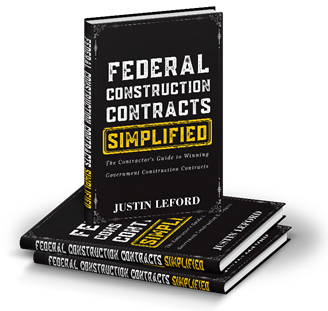
You don’t have to figure federal work out alone — and the learning curve is exactly where most contractors give up. If you want a faster path into government construction contracts, book a free 30-minute strategy consult with a business owner who has won millions in government contracts at https://www.milliondollarfederalcontractor.com/, and grab the book Federal Construction Contracts Simplified at https://federalconstructioncontractssimplified.com. Learn the process once, and you can win government construction contracts for the life of your business.
Frequently Asked Questions
How do I start bidding on government construction contracts?
Register your business in SAM.gov, confirm your NAICS codes, pursue any small-business certifications you qualify for, then search active solicitations that match your trade and submit a complete, compliant bid before the deadline.
Do I need to be a big company to win federal contracts?
No. The government sets aside a large share of construction work specifically for small businesses through programs like 8(a), HUBZone, SDVOSB, and WOSB, so smaller firms can compete in a much smaller pool.
What is SAM.gov?
SAM.gov is the official System for Award Management where businesses register to work with the federal government and where agencies post construction opportunities. You must be registered there to bid on federal contracts.
How do small-business certifications help?
Certifications like 8(a), HUBZone, SDVOSB, and WOSB make you eligible for set-aside contracts reserved for qualifying firms, meaning you often compete against a smaller field instead of the whole market.
Is winning a government contract about being the lowest bidder?
Not usually. Agencies favor bidders who follow the solicitation exactly, can show they will perform, and price the work realistically. Underbidding to win often leads to losing money on the job.
How do I win my first federal construction contract?
Start with smaller contracts to build a past-performance record, submit fully compliant bids, and use each completed job to qualify for larger opportunities. Past performance makes every future bid easier to win.