
# How to Write a Federal Capability Statement
You registered on SAM.gov, you found a contracting officer worth talking to, and the first thing they asked for was your capability statement. If you have never written one, this is where a lot of construction contractors stall out and send something that looks like a brochure. A federal capability statement is a specific document with a specific job, and it is usually the first and only thing a government buyer will read about your company.
The short answer
A capability statement is a one-page document that tells a federal buyer what your company does, that you are legitimate and registered, what makes you different from the other contractors calling them, and how to reach you. One page, not two. It exists so a contracting officer can decide in under a minute whether to keep you on file. It is not a marketing brochure and it is not a proposal.
Key Takeaways

- One page. Federal buyers scan dozens of these and a second page is rarely read.
- Five sections are required in practice: core competencies, differentiators, past performance, company data, and contact information.
- Your company data block must include your UEI, CAGE code, and NAICS codes, because those are what the buyer verifies you by.
- Tailor it per opportunity. A generic statement is the single most common mistake.
- Send it as a PDF, named with your company name, so it survives being forwarded and filed.
Why this document exists at all

Contracting officers are trying to solve a specific problem: they have a requirement, a set-aside they need to satisfy, and a limited amount of time to find qualified vendors. They are not reading your statement to be impressed. They are reading it to answer three questions.
Can this company actually do this work? Are they registered and eligible for the set-aside I need to fill? Is there evidence they have done something like it before?
Everything on the page should serve one of those three questions. Anything that does not is taking up space you cannot afford on a single page.
The five sections, in order
1. Core competencies. What you actually do, stated in the government’s language rather than yours. If your NAICS code says commercial and institutional building construction, your competencies section should sound like that, not like your website tagline. Bullet points, five to eight of them, each concrete. “Roofing” is weak. “Commercial roof replacement and repair, including TPO, modified bitumen, and standing seam metal” is what a buyer can match to a requirement.
2. Differentiators. Why you rather than the next contractor. This is the section most companies fill with adjectives and waste entirely. Trustworthy, quality-driven, and customer-focused describe every vendor on the buyer’s list. What belongs here is specific: certifications, a geographic footprint that matches the installation, bonding capacity, a security clearance, a piece of equipment most competitors do not own, a response time you can actually commit to.
3. Past performance. Contracts you have completed, ideally federal, ideally similar. For each one, name the customer, the contract value range, the period of performance, and one line on the scope. If you have no federal past performance yet, use commercial work and say so plainly. A buyer would rather see honest commercial experience than a vague statement that implies federal work you have not done.
4. Company data. This is the block a contracting officer copies into their system, so accuracy matters more than anything else on the page.
| Field | Why the buyer needs it |
|---|---|
| Unique Entity ID (UEI) | Confirms your SAM.gov registration is active |
| CAGE code | Identifies you in federal systems |
| NAICS codes | Determines whether you match the requirement |
| Socioeconomic status | Confirms eligibility for a set-aside |
| Business size for each NAICS | Small business status is per-NAICS, not company-wide |
| Bonding capacity | Determines what contract size you can pursue |
| DUNS or accepted equivalent | Still requested by some systems and primes |
5. Contact. A person’s name, a direct phone number, and an email that is monitored. Not info@. If a contracting officer with a requirement cannot reach a human in one try, they move to the next statement in the folder.
The mistake that costs the most
Sending one generic statement to everyone. A capability statement is cheap to tailor and expensive to leave generic.
If you are approaching an agency that buys roofing, the core competencies should lead with roofing and the past performance should show roofing. The same company approaching a facilities maintenance requirement should send a version leading with facilities maintenance. Same company, same truth, different emphasis.
Keep a master document, then produce a tailored one-page version per target. It takes fifteen minutes and it is the difference between being filed and being called.
Getting your codes right first
None of this works if the underlying registration is wrong. Your NAICS codes determine which opportunities you are matched to and whether you count as small for a given set-aside, and getting them wrong quietly excludes you from work you could have won. If you are not certain yours are correct, start with what is a NAICS code for construction, and if your SAM.gov registration is incomplete, how to register on SAM.gov covers the sequence.
If you are pursuing a set-aside, what is an 8(a) certification for contractors explains the eligibility side that your statement will need to claim accurately.
The SBA’s guidance on marketing to the government is the free official reference for how buyers actually use these documents.
Format details that matter more than they should
- PDF only. A Word file will be reformatted by someone else’s software and you lose control of the layout.
- Name the file with your company name. It will be saved into a folder with forty other statements. Do not make the buyer rename it.
- Your logo at the top, small. It aids recognition and nothing more.
- Readable at a glance. Ten point minimum, real margins, clear section headings.
- A date somewhere on it. Buyers keep these on file for months and want to know how current it is.
What to do after you send it
The statement is an opening, not a close. Send it, then follow up once with something useful rather than a check-in: a note that you have completed a similar project, or a question about an upcoming requirement. Contracting officers respond to relevance, not persistence.
If you send it and hear nothing, that is normal. These documents get filed and pulled out months later when a matching requirement appears. Companies that win federal work consistently are the ones whose statement was already in the folder when the need showed up.
Get this right the first time
Most contractors write three or four bad capability statements before they write a good one, and each of those is a missed opportunity with a buyer who will not look twice.
Federal Construction University exists to shorten that. We run courses on bidding, contract administration and project management, one-on-one coaching, and certification tracks for SAM.gov and bidding. Students have gone on to $75M, $15M and $4.2M in contracts, and one landed $750K in government work while learning the process.
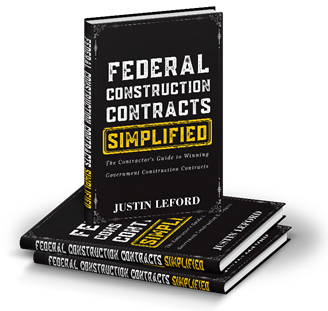
Start with a free 30-minute consult with a business owner who has won millions in government contracts. Book your complimentary consult, or start with the book, Federal Construction Contracts Simplified, which walks the whole process end to end.
Frequently Asked Questions
How long should a federal capability statement be?
One page. Contracting officers scan dozens of these when a requirement comes up, and a second page is rarely read. If you cannot fit it on one page, the problem is usually that the differentiators section is full of adjectives rather than specifics.
What must be in the company data block?
Your Unique Entity ID, CAGE code, the NAICS codes you operate under, your socioeconomic status, your business size for each NAICS, and your bonding capacity. This is the block a buyer copies into their system, so accuracy matters more than anything else on the page.
What if I have no federal past performance yet?
Use commercial work and say plainly that it is commercial. A buyer would far rather see honest commercial experience than vague wording that implies federal contracts you have not actually performed. Overstating past performance is how a company gets removed from the list permanently.
Should I send the same capability statement to every agency?
No, and this is the most common mistake. Keep a master document, then produce a tailored one-page version for each target so the core competencies and past performance lead with what that buyer actually purchases. It takes about fifteen minutes.
What file format should a capability statement be?
PDF, named with your company name. A Word file gets reformatted by someone else’s software and you lose control of the layout. Naming the file properly matters because it will be saved into a folder alongside dozens of others.
What should I do after sending a capability statement?
Follow up once with something useful rather than a check-in, such as a note about a similar project you completed or a question about an upcoming requirement. Most statements get filed and pulled out months later when a matching requirement appears.